MR .
BUSINESSBusiness Plan Builder
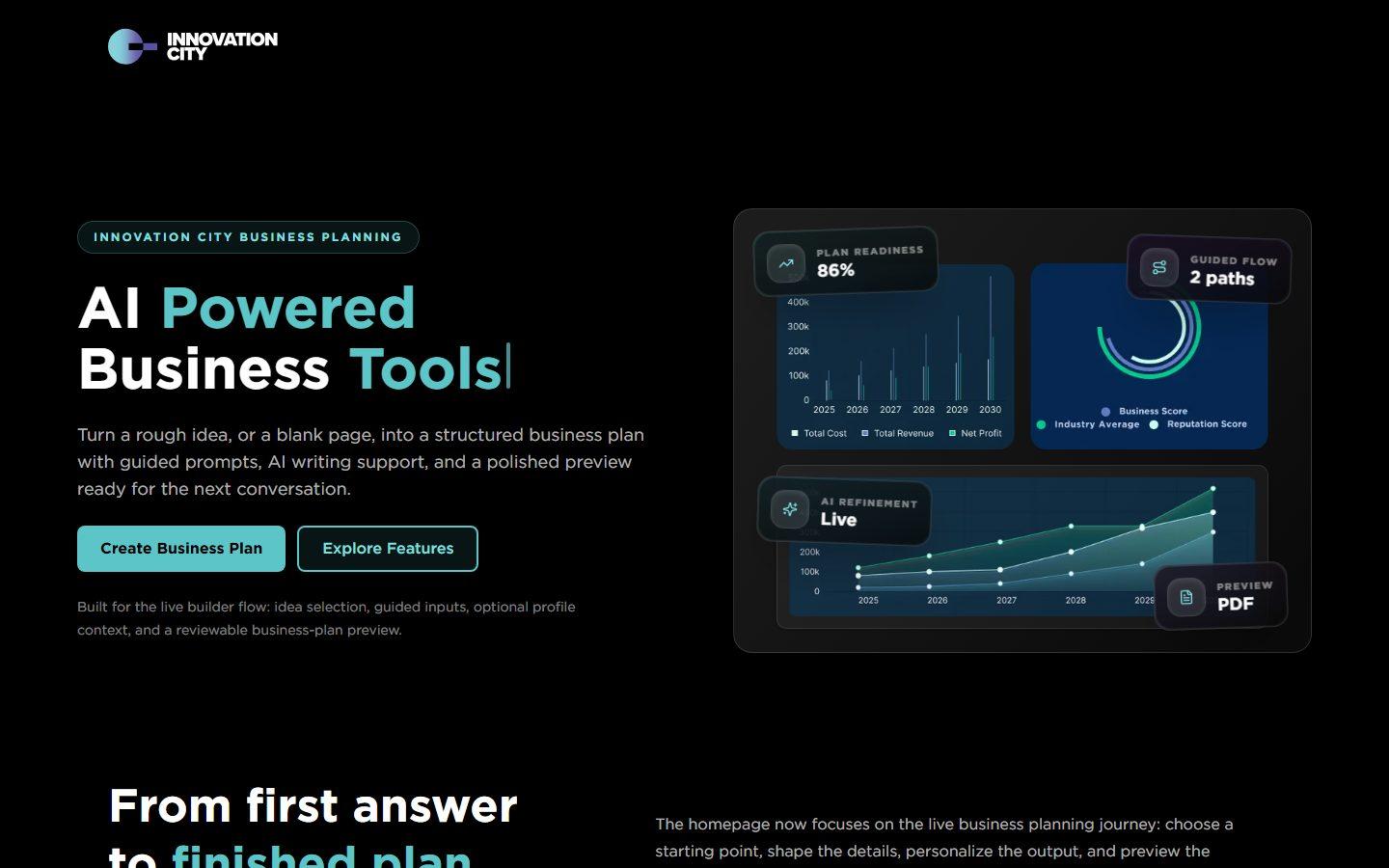
A web app that turns a business idea, or just a personal profile, into a branded business plan PDF. I led the project and, from September 2025, owned both of its applications.
- Role
- Project lead and full-stack developer
- Team
- Innovation City, with a team of interns on the first version
- Timeline
- 2025 to 2026
- Stack
- Next.js
- TypeScript
- Python
- FastAPI
- Playwright
- AWS ECS
- Links
01 · The problem
Founders thinking about setting up in Innovation City's free zone need a professional business plan. Writing one from a blank page is slow, and some founders arrive without a business idea at all.
Innovation City also wanted to reach these founders earlier. A tool that helps them plan is a natural first contact, so the plan had to come with a way for the team to follow up.
02 · The solution
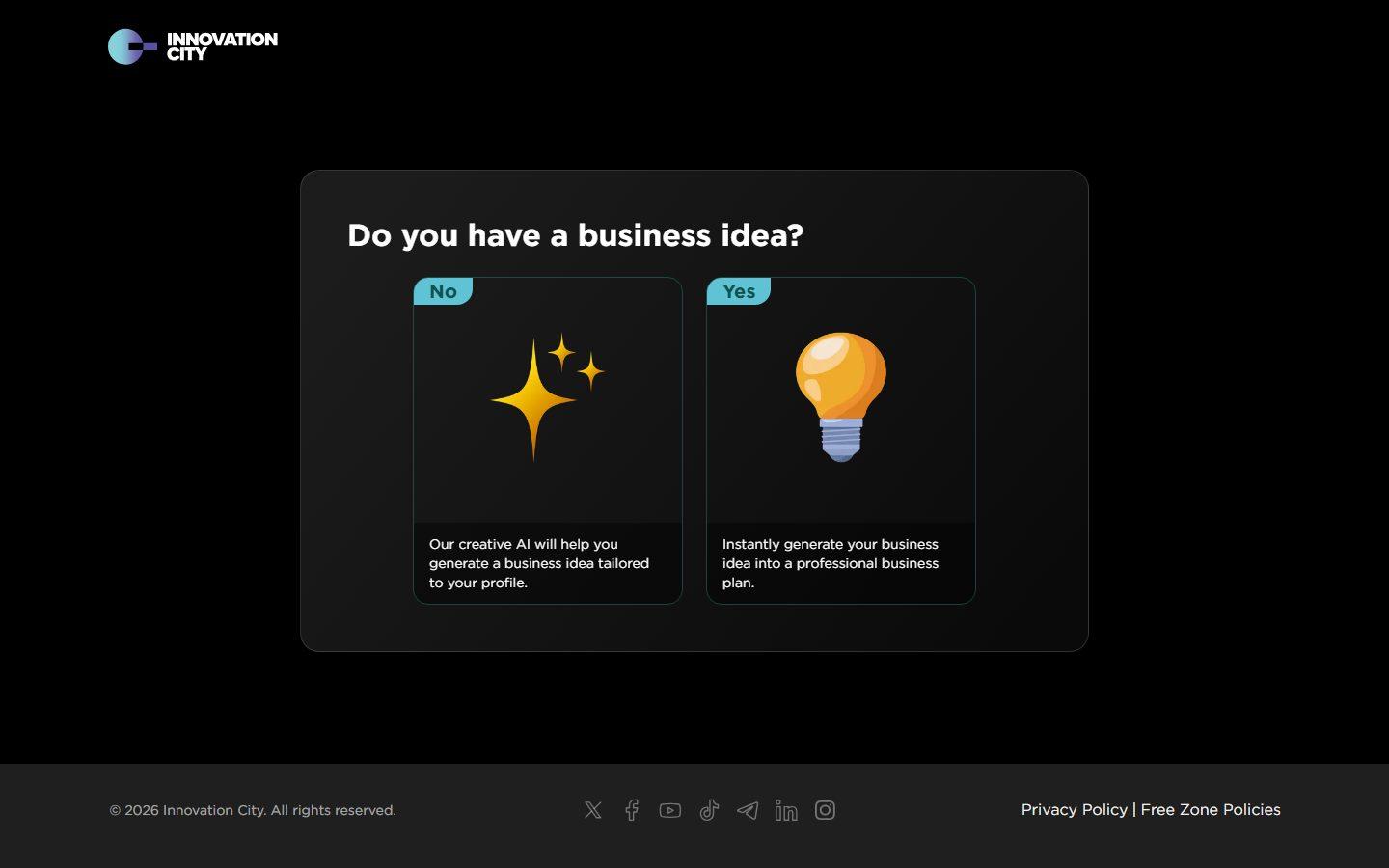
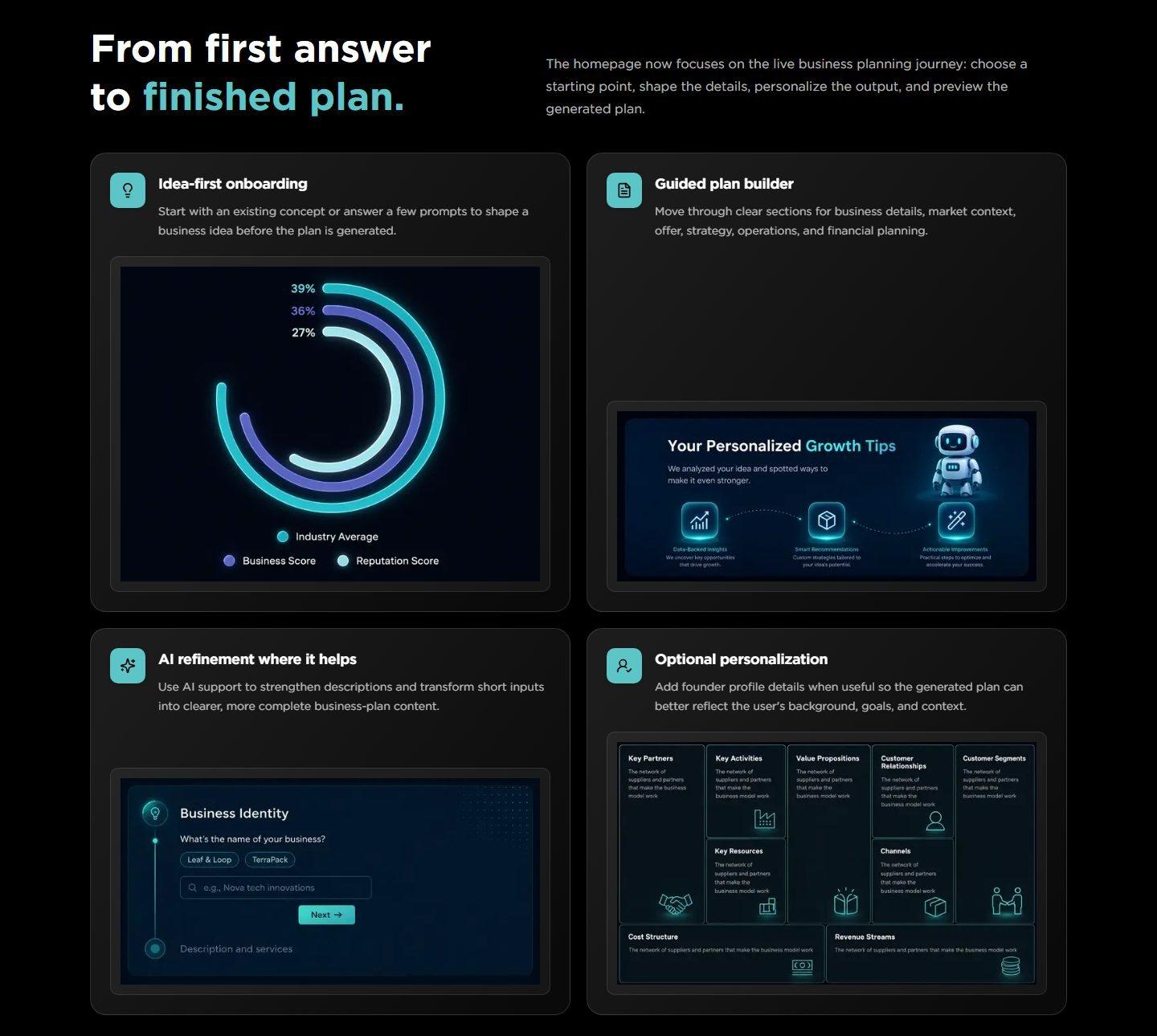
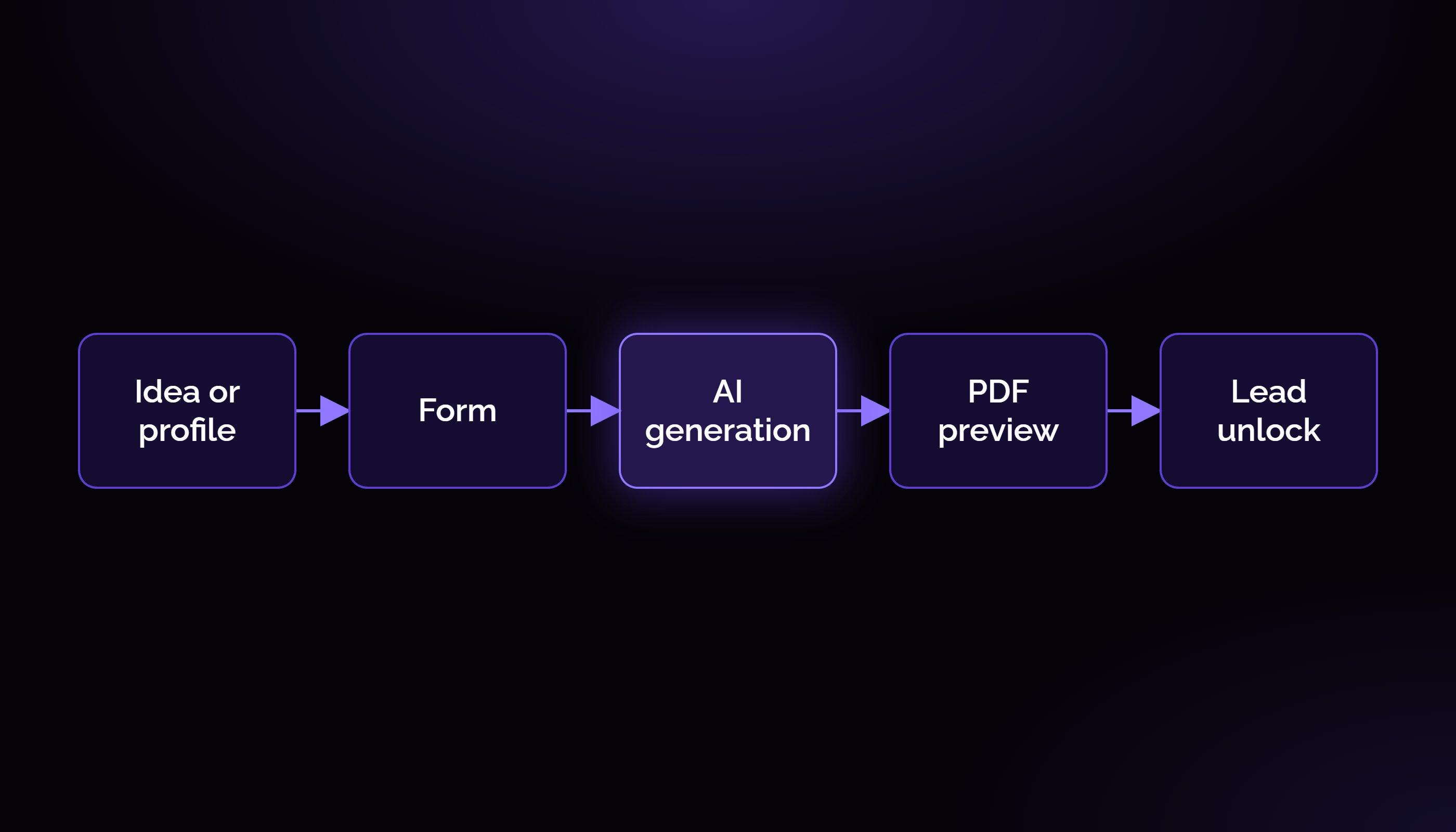
We built a guided web app. A founder answers a few questions in a five-step form, or adds a short profile if they have no idea yet, and AI suggests answers along the way. The app then writes the plan, streams its progress to the screen and produces a branded A4 PDF to preview and download.
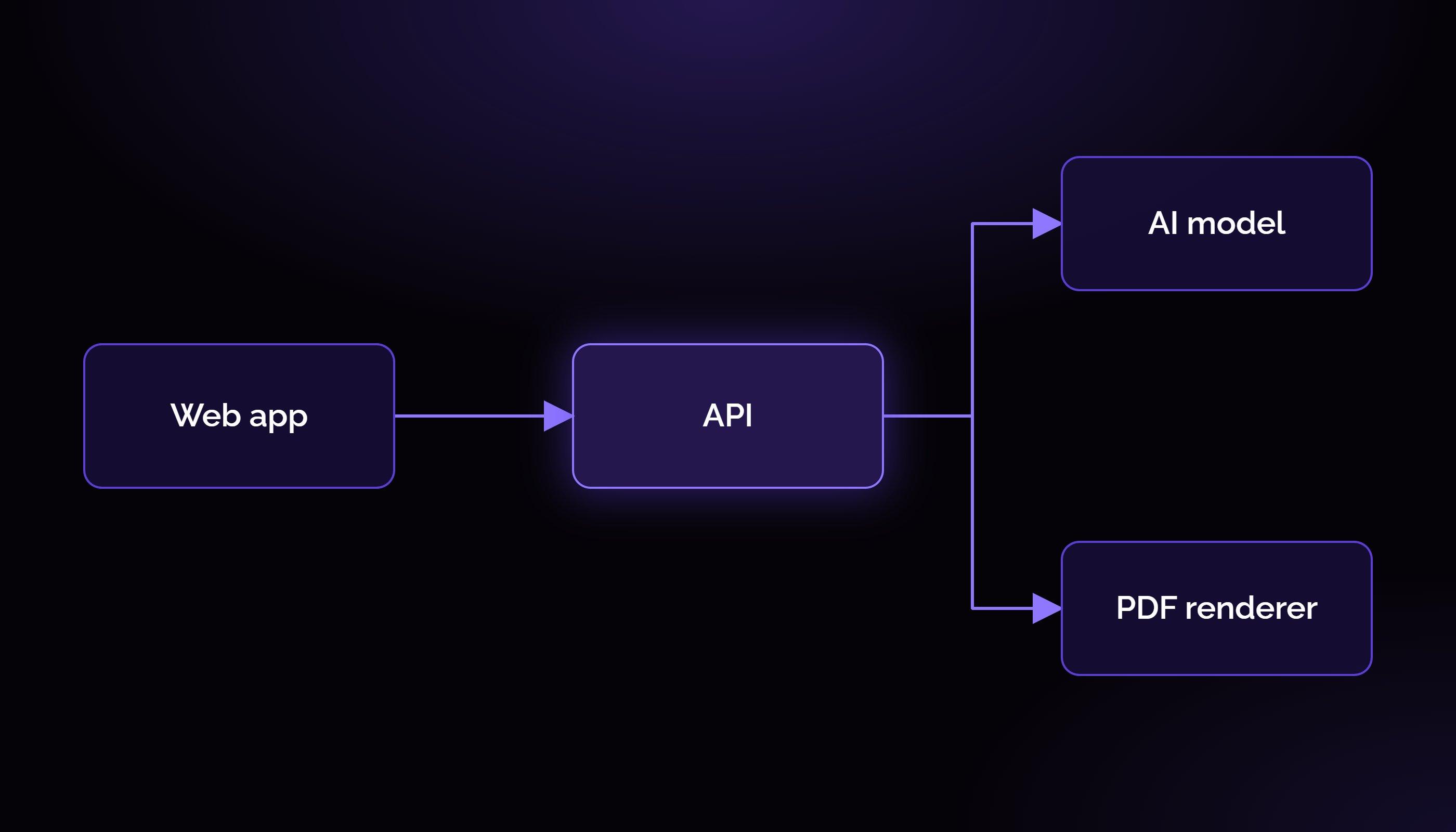
A Next.js web app collects the answers and calls a Python API. The API asks an AI model for suggestions and plan text, renders the PDF in a headless browser, and keeps recent PDFs for an hour, so repeat requests are quick and cheaper. Lead details go to the CRM when a founder unlocks the full plan. The API runs as a container on AWS.
- 01
A guided five-step form
Identity, description and services, marketing and revenue, first-year spend and an optional logo. Each step unlocks the next, so no one faces a blank page.
- 02
Ideas for founders without one
An optional profile with profession, skills and a short bio lets the AI suggest names, descriptions, channels, revenue models and spend ranges as one-click choices.
- 03
Generation you can watch
The plan is written in stages and progress streams to the screen, so a long generation shows work happening instead of an empty wait.
- 04
A branded PDF with navigation
The plan renders as a branded A4 PDF with the founder's logo, in a viewer that jumps straight to any section of the plan.
- 05
Leads for the free zone
When a founder unlocks the full plan, their details go to Innovation City's CRM, so the team can follow up early.
03 · Key decisions
- 01
Progress streamed to the screen
Instead of one response when the plan is done.
A plan takes a while to generate. Streaming shows the work happening, at the cost of careful handling of partial streams.
- 02
The server chooses the AI model
Instead of accepting a model named by the browser.
A caller cannot ask for an arbitrary model. Only the models the server allows can run.
- 03
A short-lived PDF cache
Instead of a database or object store.
Plans need no long-term storage. Keeping recent PDFs for an hour makes repeat requests quick and cheaper without adding a database.
- 04
HTML rendered to PDF in a headless browser
Instead of a PDF library.
The branded layout is plain HTML and CSS. Because a renderer like that is a security surface, uploads and what it can reach were locked down before release.
04 · My role
I led the Business Plan Builder. A team of interns built the first version in 2025: I started its frontend, and reviewed and merged their code into the product.
From September 2025 I owned both applications, the web app and the API. I took the product from that first version to a hardened release: a rebuilt landing page, a PDF viewer with section navigation, fixes to the streaming problems found in testing, and a container deployment with separate staging and production releases.
What I did
- Started the frontend of the first version: the idea form, the plan form and the connection to the AI models.
- Reviewed and merged the interns' work into the product.
- Rebuilt the landing page and added a PDF viewer that jumps to any section of the plan.
- Fixed the streaming problems found in testing, so suggestions and generation report progress and show readable errors.
- Hardened the API before a security test: the server chooses the model, uploads are checked, and security checks run before every release.
- Prepared the container deployment on AWS, with separate staging and production releases.
05 · Impact
A founder can go from an idea, or only a profile, to a branded business plan they can preview and download, without starting from a blank page.
Each unlocked plan also gives Innovation City's team a lead in its CRM. The product grew from an intern-built first version into two maintained applications, with staging and production releases and security checks before each release.
Screens