MR .
CRAFTXCraftX
An AI platform that turns construction tender drawings and rate sheets into reviewable quantity lists, priced schedules and source-linked answers.
- Role
- Developer, AI pipelines and backend
- Team
- Independent client project with a small team
- Timeline
- 2026
- Stack
- Python
- FastAPI
- LangGraph
- PostgreSQL
- Qdrant
- Next.js
- Links
01 · The problem
A construction tender arrives as drawings and spreadsheets. Before a company can bid, someone has to count and measure the items on the drawings, match each one to a schedule of rates, and price the result.
That work is slow and hard to check. A reviewer needs to see where every number came from before trusting the price, and the answers to questions about the tender are spread across its documents.
02 · The solution
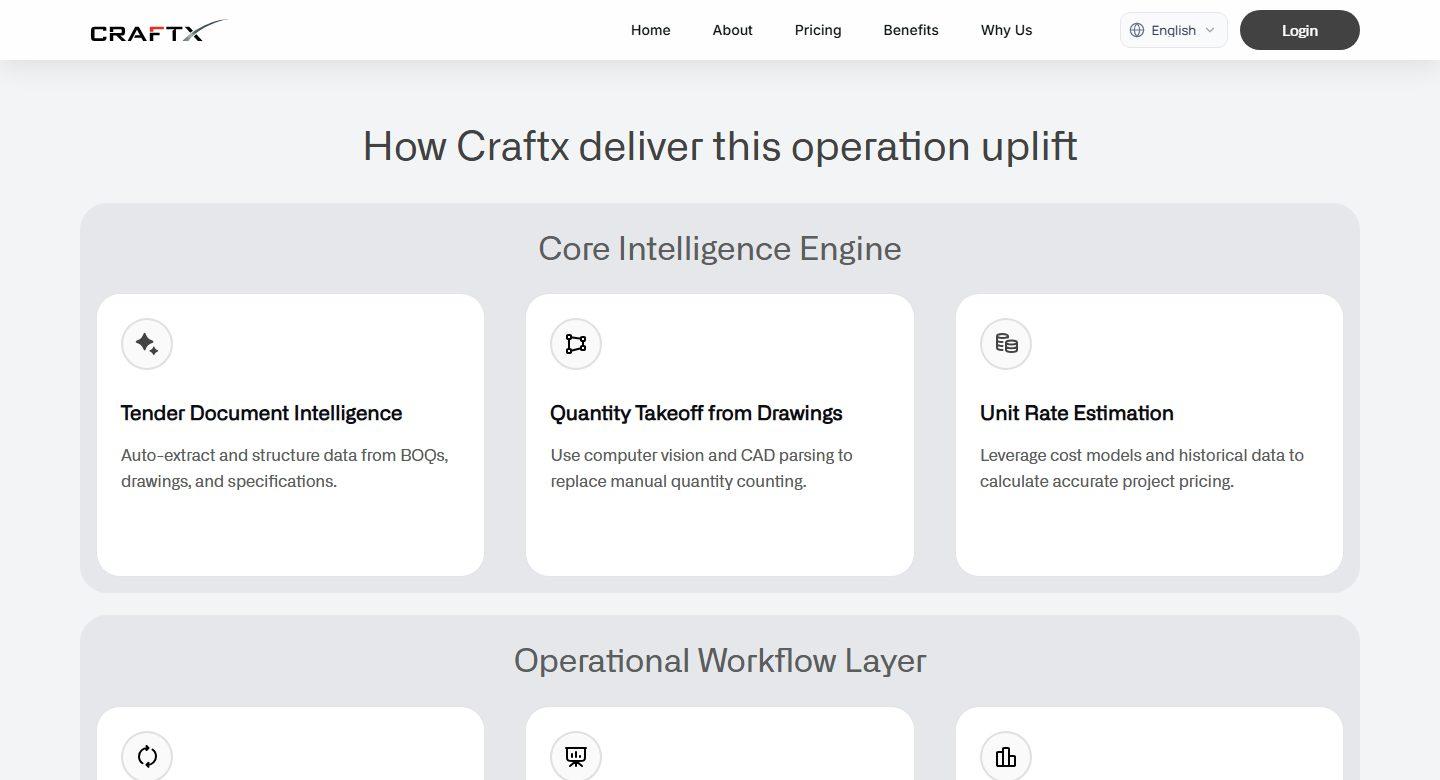
We built a platform that reads drawings, produces a bill of quantities, maps it to a rate sheet and lets people review every number against its source. Around it sit supplier bidding, scheduling, and a chat that answers from the tender documents with sources.
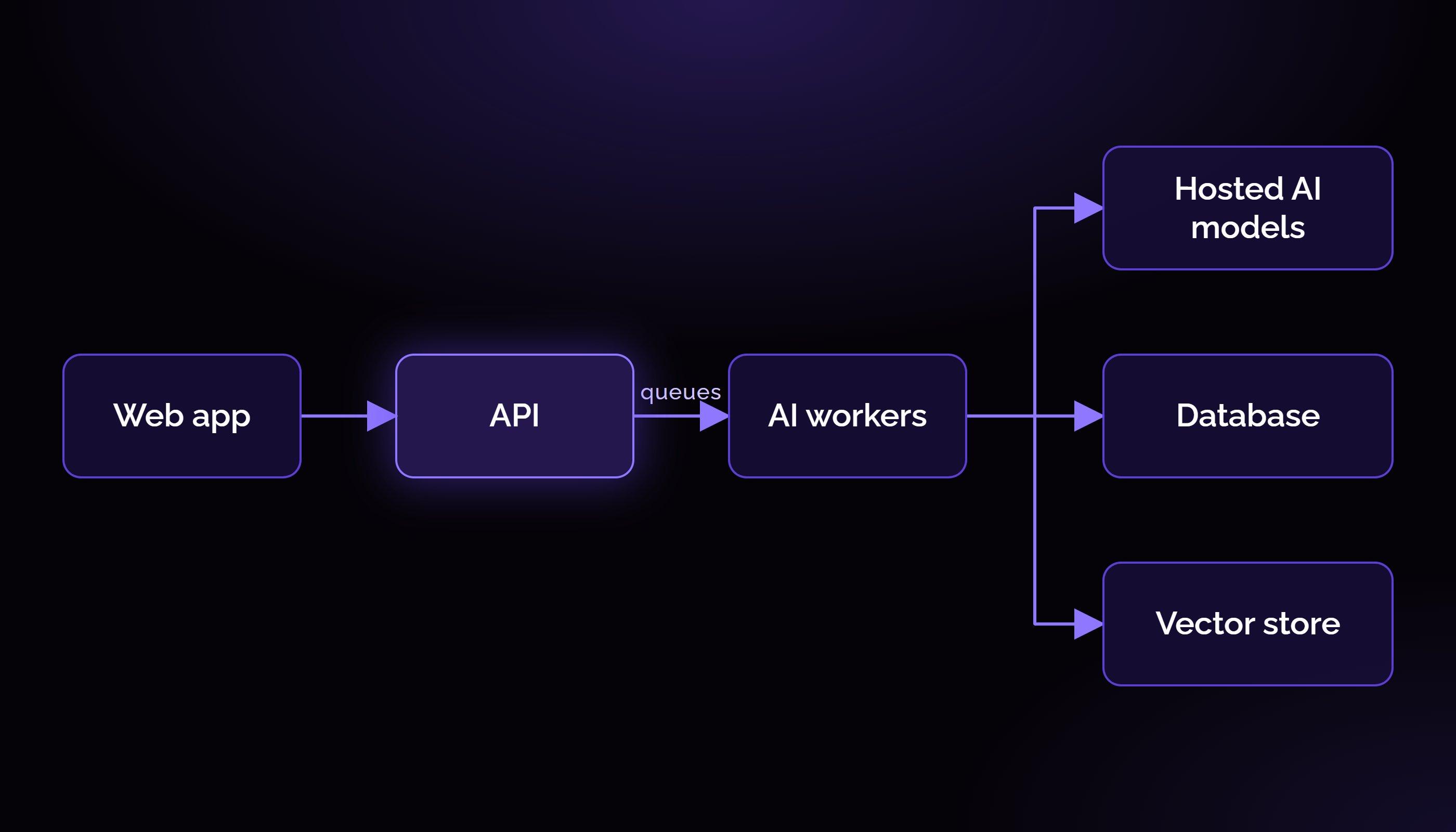
The web app talks to an API service. Long AI jobs run in background workers, never inside a web request. Workers call hosted AI models, store results in a database, and keep document text in a vector store for search. Files sit in cloud storage, and the system runs in containers on cloud servers.
- 01
Quantities from drawings
AI pipelines read PDF and CAD drawings, detect legends and symbols, and measure counts and lengths that become a bill of quantities.
- 02
Review against the source
Every quantity can be checked against a highlighted view of the drawing, and a total stands only when the runs behind it have been reviewed.
- 03
Rate sheets and pricing
Schedule-of-rates spreadsheets are parsed and the bill of quantities is mapped to them, which produces a priced schedule for the tender.
- 04
Answers from the tender documents
A chat answers questions from the tender's own documents and data, cites its sources, and stays scoped to the tender in hand.
- 05
Suppliers, scheduling and access
Suppliers receive requests for quotation and submit bids, projects get schedules, and each company's users work under role-based access in their own space.
03 · Key decisions
- 01
Quantities measured, then reviewed
Instead of counts left to a model alone.
A measuring step produces counts and lengths, and reviewers check them against highlighted source views, so every number can be checked.
- 02
A web API client generated from the backend's schema
Instead of a hand-written client.
The web app and the backend stay in step as endpoints change.
- 03
AI jobs in background workers
Instead of running AI inside web requests.
Reading a drawing takes long. Workers keep the app responsive, at the cost of tracking each job's status and recovering ones that fail.
- 04
Every query scoped to its company and tender
Instead of open search across all documents.
One company's data never reaches another's answers, and the chat answers only from the tender in hand.
04 · My role
I worked on CraftX in a small team, and my focus was the hardest part: getting trustworthy quantities out of construction drawings. I developed the AI pipelines that read PDF drawings, using Python, LangGraph and Gemini through OpenRouter, and the measuring and review steps that make their numbers checkable.
I also worked on rate-sheet parsing and mapping and on the document search, built backend services for multi-tenant tender management and role-based access, and built much of the review interface.
What I did
- Developed the AI pipelines that extract quantities from PDF drawings, with legend and symbol detection and a measuring step.
- Built much of the review interface, where each quantity is checked against a highlighted view of its source.
- Worked on rate-sheet parsing and the mapping from the bill of quantities to the schedule of rates.
- Worked on the document search behind the chat, keeping its answers tied to their sources.
- Built backend services for multi-tenant tender management and role-based access.
05 · Impact
Estimators start from a bill of quantities drawn from the drawings themselves, and every number in it can be traced back to its source.
Pricing, supplier quotes, scheduling and questions about the tender documents sit in one platform, with answers that say where they came from.
Screens