MR .
NADA.BOTNada.bot
Sybil resistance for NEAR apps: a registry of human-verification checks that any contract can query. I built its landing site and a stamp of my own, worked on the app and its provider flow, and connected it to PotLock.
- Role
- Software Engineer
- Team
- The PotLock team
- Timeline
- December 2023 to April 2024
- Stack
- Next.js
- TypeScript
- Material UI
- Zustand
- Formik
- NEAR Wallet Selector
- near-api-js
- NEAR smart contracts
- NEAR BOS
01 · The problem
Apps on NEAR that give money or weight per person, such as matched funding, need to know one thing about an account: is it a real person? Funding by matching rewards many small donations, so one person with many wallets can drain a pool.
If every app built its own defence, each would repeat the work, and so would every user. And no single test suits everyone: a check that is easy for one person is out of reach for another, and one check alone is easier to fake.
02 · The solution
Nada.bot puts the answer on-chain once, where any contract or front end can read it. It does not run a single test of its own. It keeps a registry of checks, called stamps, from many providers. A person collects stamps, each one adds to their score, and apps ask the contract whether the account counts as human.
A provider registers a check: a contract and a method that says whether an account passes. Nada.bot's registry contract lists the approved checks and records each account's stamps. An app, or another contract, makes one call to ask whether an account is human.
- 01
A registry of checks
Providers register their checks as a contract and a method. The registry lists the approved ones, records each account's stamps and turns them into a score.
- 02
One answer for any app
A front end or a contract asks the registry once whether an account is human, even in the same transaction as a donation or a vote.
- 03
Adding a provider
A provider adds its check through the app, with no change to Nada.bot itself. The registry only needs to know which contract and method to call.
- 04
Wallet sign-in and stamps
People sign in through NEAR Wallet Selector, with MyNearWallet, Nightly and Ethereum wallets among the options, then collect stamps and see their verification status.
- 05
A site for both audiences
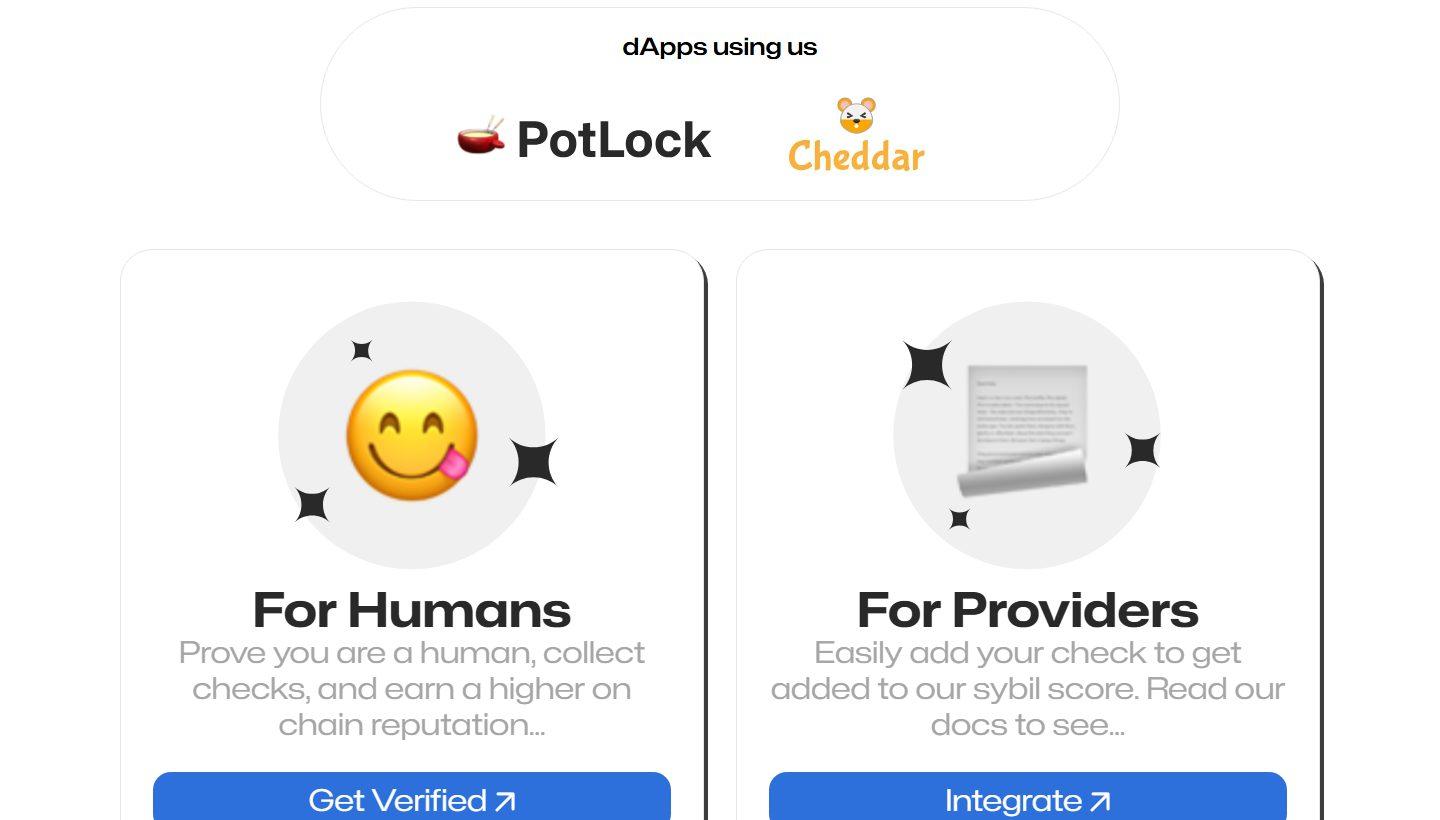
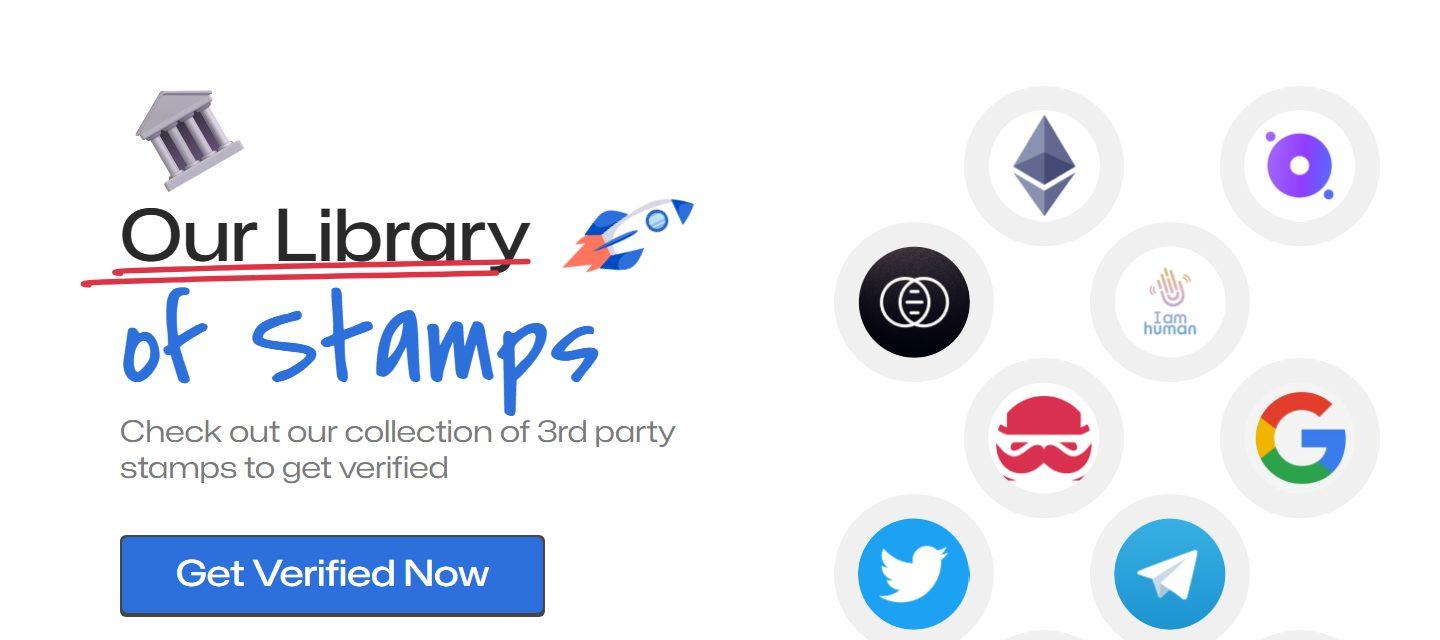
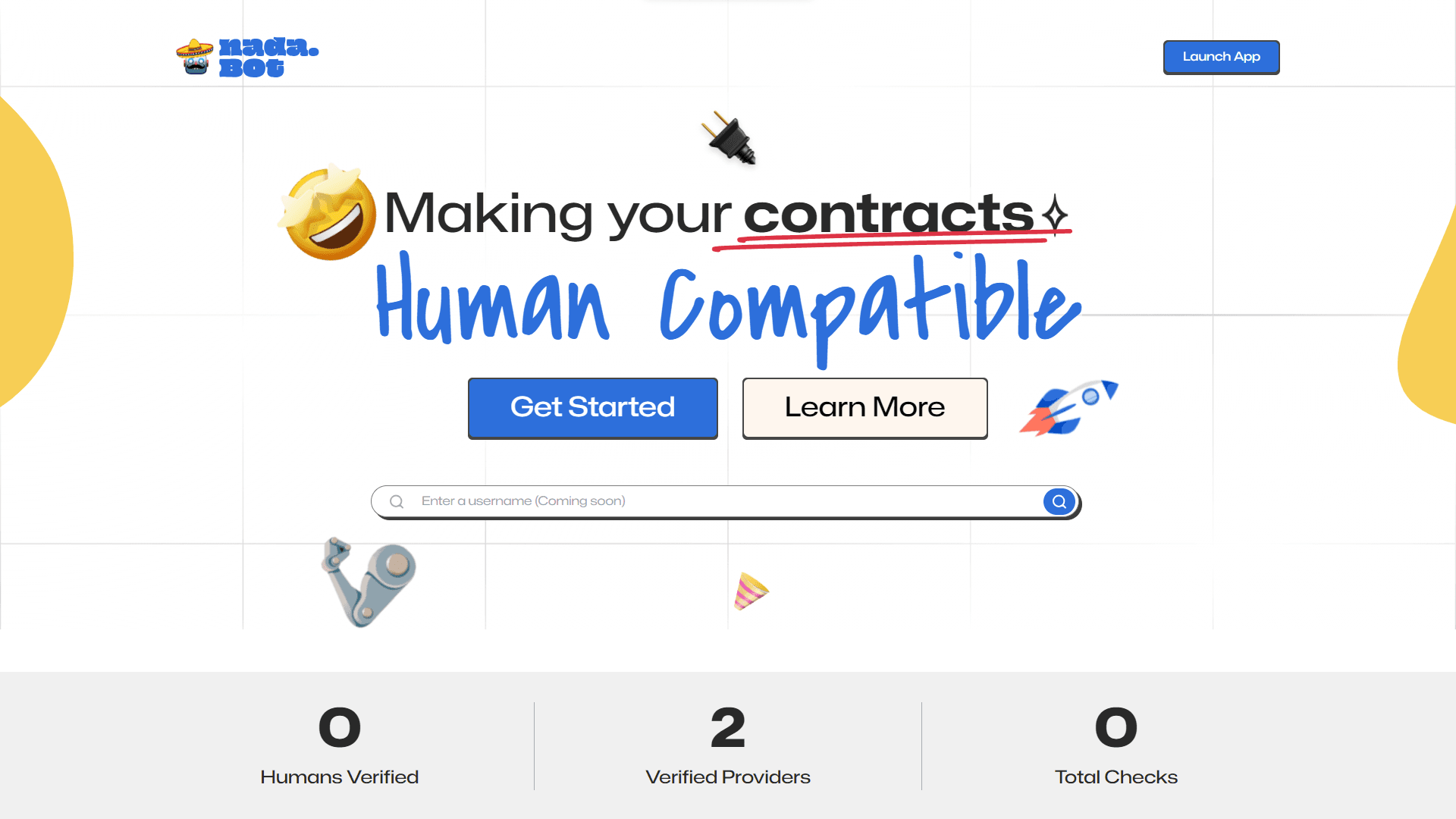
The landing site explains the product to people and to providers, shows the library of stamps and the apps that use it, and reads live counts of verified humans, providers and checks from the contract.
03 · Key decisions
- 01
A registry of many checks
Instead of one proof of humanity.
No single check suits everyone. Several independent stamps are harder to fake and easier to earn.
- 02
The answer lives on-chain
Instead of an API that each app has to trust and call.
A contract can check humanity itself, in the same transaction as a donation or a vote.
- 03
A check is a contract method with a thin front end
Instead of building every provider into the app.
A new provider adds its check without changing Nada.bot. The registry only needs to know which contract and method to call.
04 · Built with
Nada.bot is open source, so the whole stack is public. This is what it is built with, and why.
Interface
- Next.js and TypeScript
One framework for the app and the landing site.
- Material UI
Ready-made, accessible components for a form-heavy app.
- Formik and Yup
Forms and validation for registering a check.
State
- Zustand
A small store for the session and the list of checks, with no boilerplate.
Chain
- NEAR Wallet Selector
One sign-in across NEAR and Ethereum wallets.
- near-api-js and naxios
View and call methods on the registry contract.
- NEAR smart contract
The registry is the source of truth: checks, stamps and the score.
- NEAR BOS
A check's front end can itself live on-chain, as my profile check does.
05 · My role
I was a software engineer on Nada.bot in the PotLock team. My part covered the places where it meets people, providers and other apps: the landing site, wallet sign-in in the app, the mechanism for adding a provider, stamps of my own, and the connection that puts Nada.bot in front of PotLock's matched donations.
For my activity stamp I built the backend-to-contract side as well: a backend that reads a wallet's transactions over the past 12 months and reports the result to the contract that records the stamp.
What I did
- Built the landing site: the hero, the library of stamps, the apps that use it, the FAQ, and live counts of verified humans, providers and checks read from the contract.
- Built wallet connection in the app through NEAR Wallet Selector, added MyNearWallet, Nightly and Ethereum wallets, and kept the user's address and details correct after sign-in.
- Worked on the mechanism that lets a provider add a check, and fixed verification counts that did not match what the contract held.
- Built a profile check as an on-chain widget: it validates that a NEAR Social profile is complete, saves it, and calls the provider contract that records the stamp.
- Submitted a stamp based on a wallet's activity over the past 12 months, with a backend that reads the transactions and reports to the contract.
- Connected Nada.bot to PotLock: the hooks that ask whether a donor is human before a matched donation, and the verify-to-donate prompt that sends them to collect stamps first.
- Promoted the app from testnet to staging to mainnet, and fixed what surfaced on the way.
06 · Impact
Nada.bot gave apps on NEAR one shared, on-chain answer to whether an account is human, instead of each app building its own defence. A new provider can add a check without any change to Nada.bot, and a contract can check humanity in the same transaction as a donation or a vote.
In PotLock it stood in front of every matched donation: a donor who was not yet verified was sent to collect stamps first.
Screens