MR .
SMARTRSmartR
A super app that brings Innovation City's services, Ras Al Khaimah government services and partner offerings into one mobile experience. I lead it end to end, from planning and stakeholder coordination to the platform and its delivery.
- Role
- Project lead, architecture and delivery
- Team
- A mobile team, plus Innovation City, government and partner teams building services
- Timeline
- July 2026 to present
- Stack
- Tencent Super App Framework
- Mini Programs
- React Native
- TypeScript
- Python
- FastAPI
01 · The problem
A company in Innovation City deals with three kinds of service: the free zone's own (its licence, visas and requests), Ras Al Khaimah government services, and what partners offer, from banking to workspace. Each lived in its own portal or app, with its own sign-in and its own way of doing things.
The goal was one place for all of it. The hard part was not the screens. It was getting many organisations to deliver into one product: a government, partners and Innovation City's own teams, each with their own systems, timelines and approvals. One native app holding every service would have made every team wait on the same release, and the people running the service could not change what appears without a new build.
02 · The solution
We built SmartR as a host app on Tencent's Super App Framework. Each service is a mini program that its own team builds and releases inside the app, on its own schedule. Behind it, a catalogue service decides what the app shows, and the operations team runs that catalogue from an admin panel.
- 01
A host for many teams
Mini programs from Innovation City, government entities and partners run inside one app. Each has its own version, review and release, so one team's change never waits on another's.
- 02
A catalogue the business controls
Providers, mini programs, services, categories, featured sections and help pages live in a back office. Publishing or hiding a service is a decision the operations team makes, not a new app release.
- 03
The services, in one place
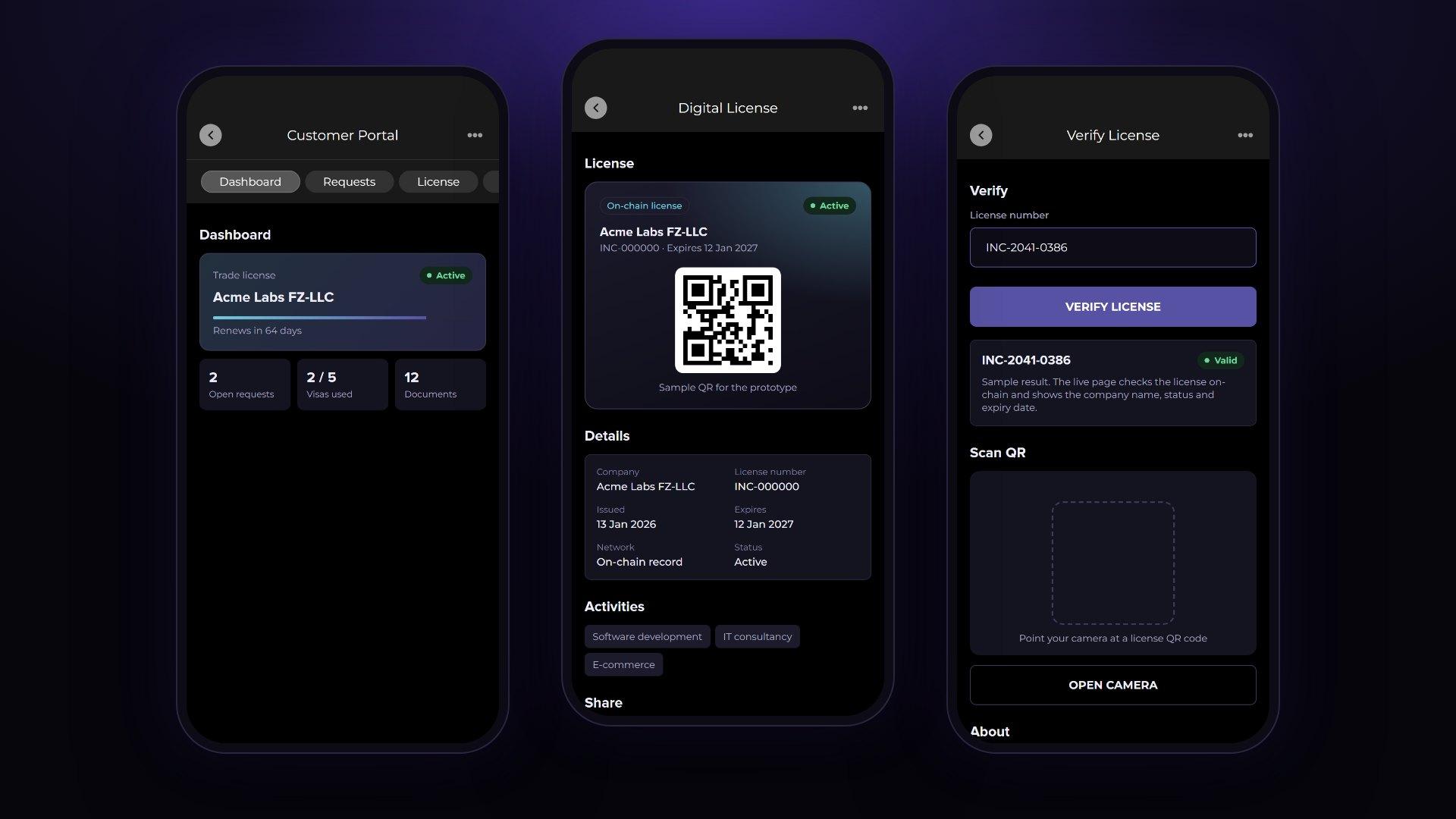
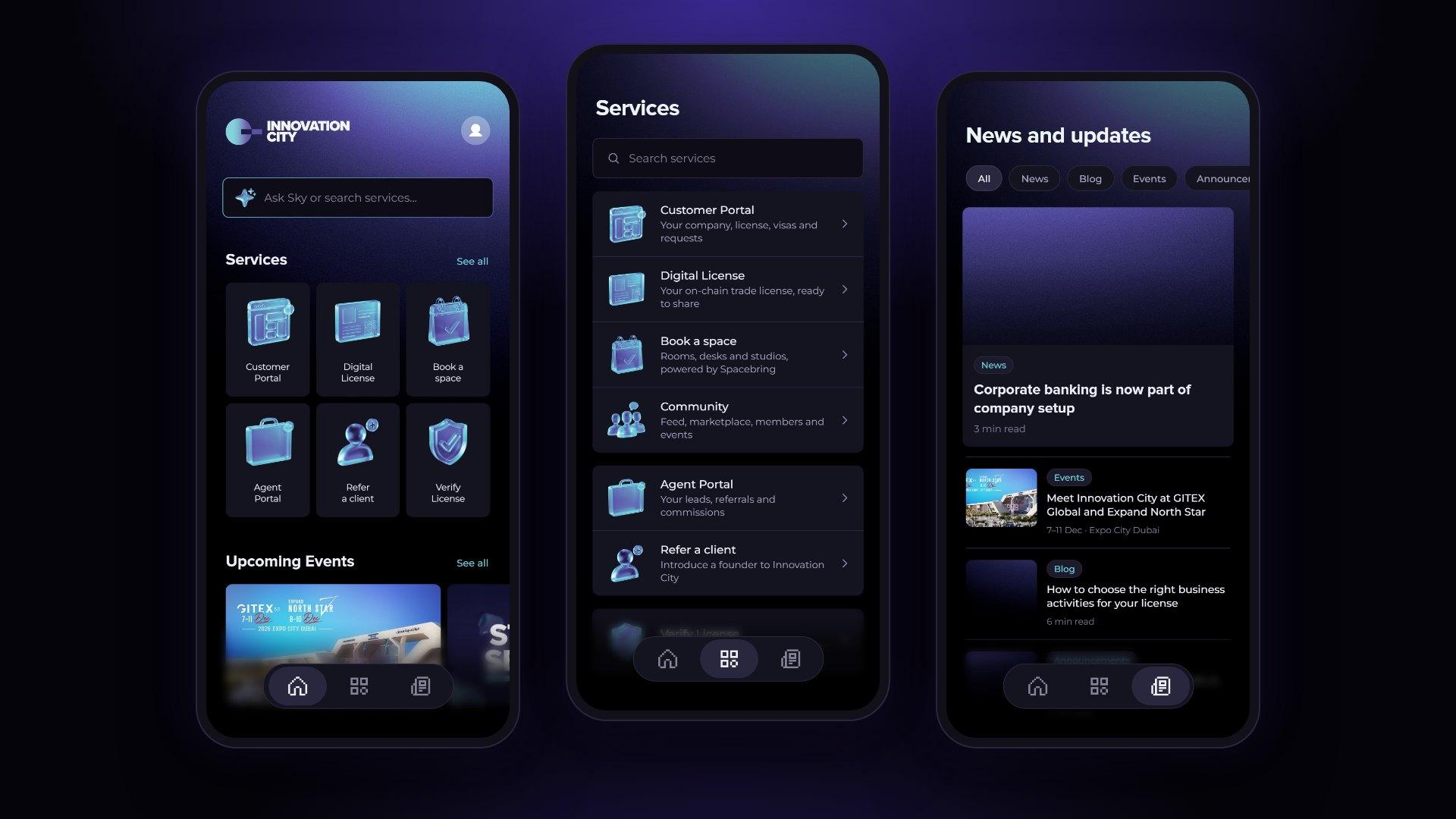
The customer portal for licence, visas and requests, the on-chain digital licence with its QR code, licence verification, booking a space and referrals, all reachable from one home screen with search.
- 04
Content, assistance and feedback
News and events from the website's CMS, the Sky assistant inside the app, and feedback that is saved first and then passed on to the CRM, so nothing a person sends is lost.
03 · Key decisions
- 01
A host app with mini programs
Instead of one native app that contains every service.
Teams inside and outside Innovation City ship separately. Each mini program has its own version, approval and release.
- 02
A catalogue the operations team edits
Instead of services hard-coded in the app.
What the app shows is data. Publishing or hiding a service is a change in the back office.
- 03
One visibility rule, in one place
Instead of checks repeated in every endpoint.
A service appears only when it, its mini program and its provider are all active, and that rule is enforced once.
- 04
Feedback saved first, forwarded second
Instead of depending on the CRM to accept it.
A person's feedback is never lost because another system is slow or down.
04 · My role
I lead SmartR end to end. Most of the work was making many organisations deliver into one product: I planned the programme and the releases, coordinated with the government entities and stakeholders whose services the app carries, and brought each service provider on board, from their requirements to their integration going live.
On the technical side I set the architecture, worked with Tencent's team on the framework, its requirements and the implementation details, and built the platform services the app depends on.
What I did
- Planned the delivery and the release from the first build to a published app on the App Store and Google Play, and led the mobile team and the direction of the user experience.
- Coordinated with government entities and stakeholders on which services the app carries and what each one needs to work inside it.
- Onboarded service providers: agreed their requirements, coordinated their integrations and their mini programs, and kept them moving through review and release.
- Worked with Tencent's team on technical discussions, requirements and implementation, and translated them into a plan the internal and partner teams could follow.
- Set the architecture: a host app, mini programs per team, and a catalogue the business controls.
- Built the catalogue service and its admin panel, the visibility rule, feedback to the CRM, and some of the mini programs.
05 · Impact
- kinds of service in one app: the free zone's, government and partners
- 3
- types of content the operations team manages in the back office
- 11
Companies in Innovation City reach the free zone's services, government services and partner offerings from one app, instead of moving between separate portals.
Teams inside and outside Innovation City now ship their services into the app on their own schedules, and the operations team decides what appears without waiting for a release. SmartR is published on both stores.
Screens